libri scuola books Fumetti ebook dvd top ten sconti 0 Carrello


Torna Indietro

yeomans david - how structures work
Zoom

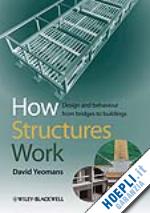
How Structures Work Design and Behaviour from Bridges to Buildings


Disponibilità: Non ordinabile


PREZZO
36,00 €


Questo prodotto usufruisce delle SPEDIZIONI GRATIS
selezionando l'opzione Corriere Veloce in fase di ordine.


Pagabile anche con Carta della cultura giovani e del merito, Carta della Cultura e Carta del Docente


Facebook Twitter Aggiungi commento


Spese Gratis

Dettagli

Genere:Libro
Lingua: Inglese
Pubblicazione: 07/2009


Trama

Wie funktionieren Gebäude? Yeomans gibt darauf eine Antwort und erläutert Konstruktionskonzepte auf verständliche Weise, ohne sich dabei komplexer mathematischer Berechnungen zu bedienen. Am Beispiel unzähliger historischer und zeitgenössischer Gebäude werden allgemeine Konstruktionsprinzipien und mathematische Berechnungsgrundlagen erklärt, die dem Leser die konstruktionstechnischen Merkmale von Bauwerken eingängig und verständlich näher bringen.


Note Editore

The alliance between architecture and structural engineering is fundamental to the design of the buildings and bridges around us. Anyone who needs or wants to understand a building must have a good understanding of the structural concepts involved. Yet structure is often cloaked in mathematics which many find difficult to get to grips with.

How Structures Work has been written to explain the behaviour of structures in a clear way without resorting to complex mathematics. Using the minimum of mathematics it explains the structural concepts clearly, illustrated by many historical and contemporary examples, allowing readers to build up a general understanding of structures. In this way they can easily comprehend the structural aspects of buildings for themselves.

Primarily aimed at students who require a good qualitative understanding of the behaviour of structures and their materials, it will be of particular interest to students of architecture and building surveying, plus architectural historians and conservationists. The straightforward, non–mathematical approach ensures it will also be suitable for a wider audience including building administrators, archaeologists and the interested layman.


Sommario

Preface.

1 Brackets and Bridges.

Cooper s tragedy.

The Forth Bridge.

Members in compression.

The Quebec Bridge.

Forces in a bracket.

The design process.

Stresses.

2 Stiffening a Beam Girder Bridges.

The simple truss.

Tension trusses.

Girder bridges: the Forth Bridge.

3 Arches and Suspension Bridges.

Building an arch.

Blackfriars Bridge.

Pontypridd Bridge.

The forces in an arch.

Practical issues.

Forces within the arch ring.

Edwards s failure.

An unexpected failure.

Arch with point load.

Iron and concrete arches.

The suspension bridge.

Arches in buildings flying buttresses.

Arches in walls.

4 Bringing the Loads to the Ground The Structural Scheme.

Introduction.

The alternatives.

Choices.

Nature of the loads.

Flow of forces , or action and reaction.

Describing the structure.

Structures are three–dimensional.

5 Safe as Houses? Walls.

Bricks and mortar.

Point loads and openings.

Cavity walls.

Thick walls.

Foundation loads.

Horizontal loads.

Foundation stresses.

6 Frames A Problem of Stability.

Timber framing.

Bracing forces.

Bending in the post.

Light frame construction.

The coming of iron.

The frame today.

The multi–storey frame.

Columns.

7 Floors and Beams Deflections and Bending Moments.

The need for science.

Floors and deflections.

The forces in the beam.

Strain.

Galileo s cantilever.

Finding the stresses.

From cantilever to beam.

Iron and steel beams.

Cast iron.

Reinforced and prestressed concrete.

Reinforced concrete beams.

Prestressing.

Two–way floors.

Other structures in bending.

8 Providing Shelter Roofs.

Common rafter roofs.

Purlin roofs.

Longitudinal stability.

The roof truss.

The coming of iron.

Three–dimensional roofs.

9 Structures in a Three–dimensional World.

Vaults.

The pointed vault.

Elaborations on the basic vault form.

Building vaults.

Domes.

A dome analysis.

Some historical examples.

The modern three–dimensional structure.

Anticlastic forms.

Structures in tension.

Structures for their time and place.

Appendix: Some Elements of Grammar.

Glossary.

Index.


Autore

David Yeomans is an engineer and an historian. He taught structural design at the Oxford and Liverpool Schools of Architecture and building construction, history and building conservation at Manchester University.
He currently teaches on the MSc course in timber conservation at the Weald and Downland Museum (run on behalf of Bournemouth University) and is also Senior Research Fellow at Liverpool University. He also practices as a structural engineer specializing in timber structures both new–build and conservation work – and was formerly secretary of the International Scientific Committee for the Analysis and restoration of Structures of Architectural Heritage, an ICOMOS scientific committee.


Altre Informazioni

ISBN:

9781405190176

Condizione: Nuovo
Dimensioni: 244 x 14.39 x 171 mm Ø 464 gr
Formato: Brossura
Pagine Arabe: 262


Dicono di noi