libri scuola books Fumetti ebook dvd top ten sconti 0 Carrello


Torna Indietro

emonds joseph; faarlund jan terje - the north germanic morphosyntax of modern english
Zoom

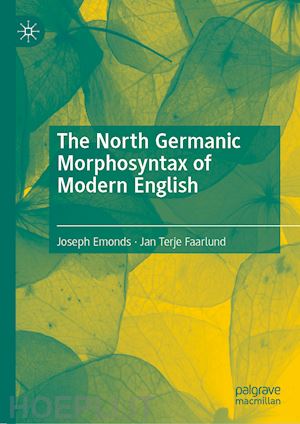
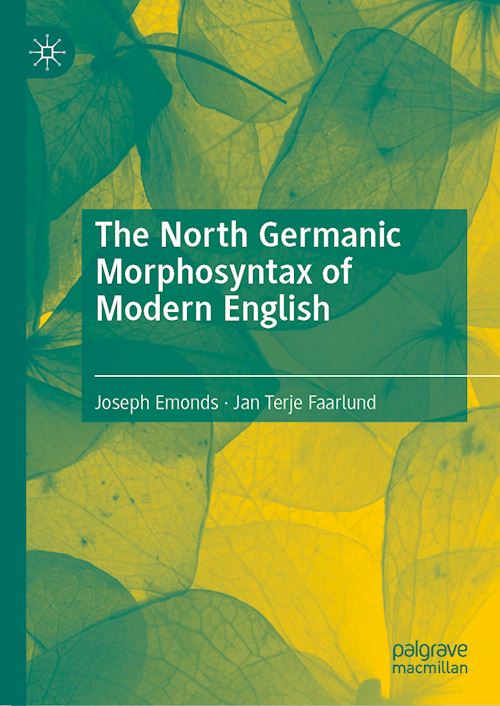
The North Germanic Morphosyntax of Modern English

;


Disponibilità: Normalmente disponibile in 15 giorni


PREZZO
129,98 €
NICEPRICE
123,48 €
SCONTO
5%


Questo prodotto usufruisce delle SPEDIZIONI GRATIS
selezionando l'opzione Corriere Veloce in fase di ordine.


Pagabile anche con Carta della cultura giovani e del merito, 18App Bonus Cultura e Carta del Docente


Facebook Twitter Aggiungi commento


Spese Gratis

Dettagli

Genere:Libro
Lingua: Inglese
Pubblicazione: 09/2024


Trama

This book argues that Middle English - and hence Modern English - is a direct descendent of Anglo Norse, the language of Viking settlers who invaded and ruled the north and east of England (the so-called Danelaw) for about 200 years preceding the Norman conquest. The authors challenge the widely accepted assumption that Middle English descends from Anglo-Saxon. Presenting over 20 arguments in morphology and syntax, they show that the patterns found in standard history of English sources derive from the North Germanic Scandinavian languages. The book shows that, while Danes ruled all England (1013-1066), their Anglo-Norse, lexically but not grammatically close to Anglo-Saxon, superseded the latter throughout England. Sentential word order, modern phrasal verbs, stranded prepositions, and standard regular noun plurals, phonetic z, and split infinitives became Norse hallmarks that persist to this day, while numerous indications of West Germanic (German-style) grammar disappeared entirely. As Anglo-Norse became Middle English, it absorbed much vocabulary from the Anglo-Saxons. This book suggests that in the Middle English German-sourced vocabulary, eliminating borrowed Romance, purely Anglo-Saxon vocabulary may have been double that of purely Norse origin. However, language history is not determined by its vocabulary; what counts is rather a language’s syntax, and the authors posit that this is what makes Modern English Scandinavian. This book will be of interest to scholars of Linguistics, Indo-European Studies, and English Language and Literature, particularly those studying the historical linguistic development of Germanic languages, as well as syntax more broadly. 


Sommario

Chapter One: The Germanic Language Family in England.- Chapter Two: The Middle English Lexicon: Cultural Integration Creates Anglicized Norse.- Chapter Three: Norse Properties of Middle English Lacking in Old English.- Chapter Four: Split Infinitives and the Category of to.- Chapter Five: Morphosyntactic Properties of Old English Lacking in Old Scandinavian and Middle English.- Chapter Six: Innovations Shared between English and Mainland Scandinavian.- Chapter Seven: The Hybrid Grammatical Lexicon of Middle English.- Chapter Eight: The Sparse Inflection of Middle and Modern English.- Chapter Nine: Phonological Indicators of a Norse Source for Middle English.- Chapter Ten: The Immigrants’ Language Lives On.


Autore

Joseph Emonds is Professor of English at Palacky University, Czechia. He has previously held teaching and research posts in the USA, France, the Netherlands, the UK, Japan, Austria and Spain. His publications focus on topics including generative grammar, syntax, phonology, and language change.


Jan Terje Faarlund is Emeritus Professor of Scandinavian Languages at the University of Oslo, Norway. His main fields of research are syntactic theory and change. He is elected member of The Philological Society, The Norwegian Academy of Science and Letters, and the Royal Norwegian Society of Science and Letters.


Altre Informazioni

ISBN:

9783031641664

Condizione: Nuovo
Dimensioni: 210 x 148 mm
Formato: Copertina rigida
Illustration Notes:XXXII, 252 p. 8 illus., 1 illus. in color.
Pagine Arabe: 252
Pagine Romane: xxxii


Dicono di noi