libri scuola books Fumetti ebook dvd top ten sconti 0 Carrello


Torna Indietro

crystal david - the cambridge encyclopedia of language
Zoom

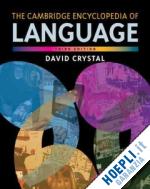
The Cambridge Encyclopedia of Language THIRD EDITION


Disponibilità: Normalmente disponibile in 20 giorni
A causa di problematiche nell'approvvigionamento legate alla Brexit sono possibili ritardi nelle consegne.


PREZZO
54,98 €
NICEPRICE
52,23 €
SCONTO
5%


Questo prodotto usufruisce delle SPEDIZIONI GRATIS
selezionando l'opzione Corriere Veloce in fase di ordine.


Pagabile anche con Carta della cultura giovani e del merito, 18App Bonus Cultura e Carta del Docente


Facebook Twitter Aggiungi commento


Spese Gratis

Dettagli

Genere:Libro
Lingua: Inglese
Pubblicazione: 06/2010
Edizione: Edizione rivisitata, 3° edizione


Note Editore

This new, thoroughly revised edition of the acclaimed Cambridge Encyclopedia of Language incorporates the major developments in language study which have taken place since the mid 1990s. Two main new areas have been added: the rise of electronic communication in all its current forms from email to texting, and the crisis affecting the world's languages, of which half are thought to be so seriously endangered that they will die out this century. • All language statistics have been updated, and additional information provided about their linguistic affiliation • All topics involving technology have been revised to take account of recent developments, notably in phonetics, language disability, and computing • Maps have been revised to include new countries or country names • Special attention has been paid to fast-moving areas such as language teaching and learning • The text design has been completely updated with many new illustrations throughout


Sommario

Preface to 1st edition; Preface to 2nd edition; Preface to 3rd edition; Part I. Popular Ideas About Language: 1. The prescriptive tradition; 2. The equality of languages; 3. The magic of language; 4. The functions of language; 5. Language and thought; Part II. Language and Identity: 6. Physical identity; 7. Psychological identity; 8. Geographical identity; 9. Ethnic and national identity; 10. Social identity; 11 Contextual identity; 12. Stylistic identity and literature; Part III. The Structure of Language: 13. Linguistic levels; 14. Typology and universals; 15. The statistical structure of language; 16. Grammar; 17. Semantics; 18. Dictionaries; 19. Names; 20. Discourse and text; 21. Pragmatics; Part IV. The Medium of Language: Speaking and Listening: 22. The anatomy and physiology of speech; 23. The acoustics of speech; 24. The instrumental analysis of speech; 25. Speech reception; 26. Speech interaction with machines; 27. The sounds of speech; 28. The linguistic use of sound; 29. Suprasegmentals; 30. Sound symbolism; Part V. The Medium of Language: Writing and Reading: 31. Written and spoken language; 32. Graphic expression; 33. Graphology; 34. The process of reading and writing; Part VI. The Medium of Language: Signing and Seeing: 35. Sign language; 36. Sign language structure; 37. Types of sign language; Part VII. Child Language Acquisition: 38. Investigating children's language; 39. The first year; 40. Phonological development; 41. Grammatical development; 42. Semantic development; 43. Pragmatic development; 44. Language development in school; Part VIII. Language, Brain, and Disability: 45. Language and the brain; 46. Language disability; Part IX. The Languages of the World: 47. How many languages?; 48. How many speakers?; 49. The origins of language; 50. Families of language; 51. The Indo-European family; 52. Other families; 53. Language isolates; 54. Language change; 55. Pidgins and creoles; Part X. Language in the World: 56. The language barrier; 57. Translating and interpreting; 58. Artificial languages; 59. World languages; 60. Multilingualism; 61. Language planning; 62. Foreign language teaching and learning; 63. Language for special purposes; Part XI. Language and Communication: 64. Language and other communication systems; 65. Linguistics; Appendices: I. Glossary; II. Special symbols and abbreviations; III. Table of the world's languages; IV. Further reading; V. Index of languages, families, dialects, and scripts; VI. Index of authors and personalities; VII. Index of topics; Acknowledgements.


Prefazione

This third edition incorporates the major developments in language study since the mid 1990s. It includes major new sections on electronic communication and language death. All statistics and maps have been updated, and all sections revised. The book benefits from many new illustrations and a completely fresh text design.


Autore

David Crystal is one of the world's foremost authorities on language and works as a writer, editor, lecturer, and broadcaster. He is Honorary Professor of Linguistics at the University of Wales, Bangor and has published over 100 books. His most recent publications include: Think On My Words: Exploring Shakespeare's Language (2008), Language and the Internet, 2nd Edition (2006) and English as a Global Language, 2nd Edition (2003).


Altre Informazioni

ISBN:

9780521736503

Condizione: Nuovo
Dimensioni: 276 x 36 x 219 mm Ø 2100 gr
Formato: Brossura
Illustration Notes:200 b/w illus. 20 maps 100 tables
Pagine Arabe: 524


Dicono di noi