Questo prodotto usufruisce delle SPEDIZIONI GRATIS
selezionando l'opzione Corriere Veloce in fase di ordine.
Pagabile anche con Carta della cultura giovani e del merito, 18App Bonus Cultura e Carta del Docente
How is nostalgia expressed through space?
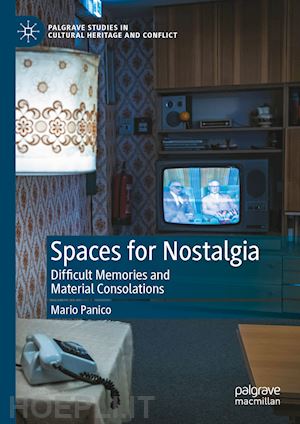
Studies of nostalgia have long illustrated the emotional dynamics which condition our desire to go back to a time and a space that belong to the past. This book addresses this condition from an innovative perspective, by over-exposing the spatial dimension of nostalgia. Doing so unveils alternative and complementary ways of thinking through how this emotion is activated: in particular, how space – unlike time – can be recreated in the present, even in a different location, with the deliberate aim of consoling this bittersweet sensation. The volume defines this re-creation as a “space for nostalgia”.
In this book, this concept is applied within the context of cultural heritage and difficult memories. As a further step, then, the volume questions the modalities through which nostalgia can interact with and permeate a space of memory, therefore influencing collective understandings and the emotional re-writings of our shared pasts. Through case studies relating to challenging nostalgias for troubled pasts in Western Europe, the book examines how the furnishing and use of space, the discourses that surround it, and the objects that become synecdoche of it provide a terrain where even unlikely or troubling forms of nostalgia can grow and blossom.
1. Introduction.- 2. Semiotics of Nostalgia.- 3. Emotion and Spatial Consolation.- 4. Memory and Imagination.- 5. Reconstruction of the Past and Authenticity.- 6. Fascist Legacy and Conflict Heritage.- 7. Musealisation and the Re-enactment of Nostalgia .- 8. Conclusion: What a culture lost.
Mario Panico is a lecturer and a postdoctoral fellow at the University of Amsterdam and a member of the Amsterdam School for Heritage, Memory and Material Culture (AHM). His research deals with difficult cultural heritage, postmemory, nostalgia and the representation and mediation of perpetrators in trauma sites, memory museums and visual culture.


Il sito utilizza cookie ed altri strumenti di tracciamento che raccolgono informazioni dal dispositivo dell’utente. Oltre ai cookie tecnici ed analitici aggregati, strettamente necessari per il funzionamento di questo sito web, previo consenso dell’utente possono essere installati cookie di profilazione e marketing e cookie dei social media. Cliccando su “Accetto tutti i cookie” saranno attivate tutte le categorie di cookie. Per accettare solo deterninate categorie di cookie, cliccare invece su “Impostazioni cookie”. Chiudendo il banner o continuando a navigare saranno installati solo cookie tecnici. Per maggiori dettagli, consultare la Cookie Policy.