Questo prodotto usufruisce delle SPEDIZIONI GRATIS
selezionando l'opzione Corriere Veloce in fase di ordine.
Pagabile anche con Carta della cultura giovani e del merito, 18App Bonus Cultura e Carta del Docente
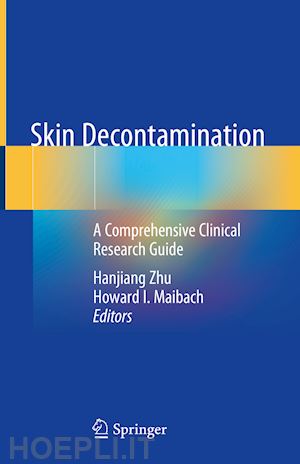
The skin is the first line of defense against chemical warfare agents including nerve agents and toxic industrial chemicals, providing a possible barrier or delay to systemic distribution. However, some chemicals act directly on the skin including vesicants sulfur mustard and corrosive compounds such as strong acids or bases, and do not have to gain access to systemic circulation to cause extensive skin damage. Early and rapid skin decontamination is extremely important following exposure to chemical warfare agents and toxic industrial chemicals because it decreases serious skin damage to the patient and, potentially, their doctor.
This multi-authored international text pulls together a century of decontamination research and helps the reader expedite solutions that will decrease morbidity and mortality. Complete with dozens of hiqh quality photographs and illustrations, Skin Decontamination aids industrial hygiene, dermatology, occupational physicians and thoseinvolved in the public health arena.
Chapter 1. Isolated Human and Animal Stratum Corneum As a Partial Model for the 15 Steps of Percutaneous Absorption: Emphasizing Decontamination, Part I.- Chapter 2. Isolated Human And Animal Stratum Corneum As A Partial Model For The 15 Steps Of Percutaneous Absorption: Emphasizing Decontamination Part II.- Chapter 3. Recent Knowledge: Human/Animal Skin Decontamination.- Chapter 4. The Decontamination of Chemically Contaminated Remains.- Chapter 5. Effectiveness of Chemical, Biological, Radiological, and Nuclear (CBRN) Skin Decontaminants: Towards Tests Standardization.- Chapter 6. Effects of Soap-Water Wash on Human Epidermal Penetration.- Chapter 7. Fuller's Earth: Old and Faithful Skin Decontaminant Against Toxic Agents.- Chapter 8. Comparison of Four Different Fuller’s Earth Formulations in Skin Decontamination.- Chapter 9. The Mass Decontamination Paradigm: Response Relating to Gas Phase Exposures and Skin Decontamination.- Chapter10. Binding Affinity and Decontamination of Dermal Decontamination Gel (DDGel) to Model Chemical Warfare Agent (CWA) Simulants.- Chapter 11. Dermostyx (IB1): High-efficacy and Safe Topical Skin Protectant Against Percutaneous Toxic Agents.- Chapter 12. Understanding the Impact of Responder Management Strategies on Public Experiences and Behaviour During Mass Decontamination.
Hanjiang Zhu, PhD
University of California San Francisco, Dermatology
Department of Dermatology
2340 Sutter Street N461
San Francisco, CA 94143/0989
USA
Tel: 408-829-3797
Fax: 415-753-5304
sunnie.zhu@foxmail.com
Howard I. Maibach, MD
Professor, Dermatologist
University of California San FranciscoDepartment of Dermatology2340 Sutter Street N461
San Francisco, CA 94143/0989
USA
Tel: (415)673-9693
Fax: (415) 673-3533


Il sito utilizza cookie ed altri strumenti di tracciamento che raccolgono informazioni dal dispositivo dell’utente. Oltre ai cookie tecnici ed analitici aggregati, strettamente necessari per il funzionamento di questo sito web, previo consenso dell’utente possono essere installati cookie di profilazione e marketing e cookie dei social media. Cliccando su “Accetto tutti i cookie” saranno attivate tutte le categorie di cookie. Per accettare solo deterninate categorie di cookie, cliccare invece su “Impostazioni cookie”. Chiudendo il banner o continuando a navigare saranno installati solo cookie tecnici. Per maggiori dettagli, consultare la Cookie Policy.