libri scuola books Fumetti ebook dvd top ten sconti 0 Carrello


Torna Indietro
ARGOMENTO:  BOOKS > SCIENZA E TECNICA > AMBIENTE

litter marta i. (curatore); nicolli hugo b. (curatore); meichtry martin (curatore); quici natalia (curatore); bundschuh jochen (curatore); bhattacharya prosun (curatore); naidu ravi (curatore) - one century of the discovery of arsenicosis in latin america (1914-2014) as2014
Zoom

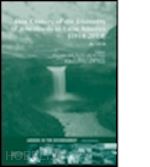
One Century of the Discovery of Arsenicosis in Latin America (1914-2014) As2014 Proceedings of the 5th International Congress on Arsenic in the Environment, May 11-16, 2014, Buenos Aires, Argentina

; ; ; ; ; ;


Disponibilità: Normalmente disponibile in 20 giorni
A causa di problematiche nell'approvvigionamento legate alla Brexit sono possibili ritardi nelle consegne.


PREZZO
182,98 €
NICEPRICE
173,83 €
SCONTO
5%


Questo prodotto usufruisce delle SPEDIZIONI GRATIS
selezionando l'opzione Corriere Veloce in fase di ordine.


Pagabile anche con Carta della cultura giovani e del merito, 18App Bonus Cultura e Carta del Docente


Facebook Twitter Aggiungi commento


Spese Gratis

Dettagli

Genere:Libro
Lingua: Inglese
Editore:

CRC Press

Pubblicazione: 04/2014
Edizione: 1° edizione


Trama

Arsenic has been an issue of concern since decades because of the serious incidence on human health coming from ingestion of water with small amounts of arsenic for prolonged periods. The presence of Arsenic in water, intended for drinking, has caused the spread of arsenicosis, a set of signs and symptoms manifested mainly by dermatological disorders, such as melanodermia, leucodermia and/or palmoplantar keratoderma, which may evolve into more serious pathologies, such as different types of cancer. The affected populations usually live in countries with low-income levels, and the disease largely affects dispersed rural and periurban populations. Around 100 million people are at risk in Asia and it is estimated that in Latin America the population at risk exceeds 14 million people, with high incidence in Argentina (about 4 million people), Chile, El Salvador, Mexico, Nicaragua and Peru. In the rest of the world, the most affected countries are India, China and Bangladesh, although the presence of arsenic in groundwater has been also found in some European countries and in the United States.


Note Editore

The Congress "Arsenic in the Environment" offers an international, multi- and interdisciplinary discussion platform for research aimed towards a holistic solution to the problem posed by the environmental toxin arsenic, with considerable societal impact. The congress has focused on cutting edge and breakthrough research in physical, chemical, toxicological, medical, agricultural and other specific issues on arsenic across a broader environmental realm. The Congress “Arsenic in the Environment” was first organized in Mexico City (As2006) followed by As2008 in Valencia, Spain, As2010 in Tainan, Taiwan and As2012 in Cairns, Australia. The 5th International Congress As2014 was held May 11-16, 2014 in Buenos Aires, Argentina and entitled One Century of the Discovery of Arsenicosis in Latin America (1914-2014). The session topics comprised:Theme 1: Arsenic in environmental matrices (air, water and soil)Theme 2: Arsenic in foodTheme 3: Arsenic and healthTheme 4: Removal technologiesTheme 5: Mitigation management and policy Hosting this Congress in Argentina was especially relevant because 2014, marks 100 years since the discovery of the disease Hidroarsenicismo Crónico Regional Endémico (HACRE) or arsenicosis by Dr. Goyenechea and Dr. Ayerza in the city of Bell Ville, Province of Córdoba, Argentina. Dr. Ayerza was the first person to relate skin disorders to the consumption of groundwater with high concentrations of arsenic. It is estimated that more than 14 million people in Latin America are at risk, of whom nearly 4 million are exposed to drinking water with high arsenic concentration in Argentina, and further in Chile, El Salvador, Mexico, Nicaragua and Peru. A vast area of the Chaco-Pampean Plain in Argentina, mostly in the semi-arid regions, is affected not only by arsenic exposure from drinking water but also through other exposure pathways, e.g. through food and other dietary intake. The Congress has gathered professionals involved in different segments of interdisciplinary research in an open forum, and strengthens relations between academia, industry, research laboratories, government agencies and the private sector to share an optimal atmosphere for exchange of knowledge, discoveries and discussions about the problem of arsenic in the environment.


Sommario

About the book series ObituaryOrganizers Scientific committee Foreword (President, KTH) Foreword (President, USQ) Foreword (President, CNEA) Editors’ foreword List of contributors Plenary presentationsSection 1: Arsenic in environmental matrices (air, water, soil and biological matrices)1.1 Geological and hydrogeological controls of arsenic in groundwater and other aquatic systems1.2 Controls of solid phase chemistry and sorption mechanisms1.3 Groundwater quality in Latin America1.4 Speciation of arsenic and analytical advancements1.5 Arsenic in mining environments1.6 Arsenic in soil–plant systems1.7 Arsenic-biotransformations and microbial interactions1.8 Arsenic bioavailability and ecotoxicology Section 2: Arsenic in food2.1 Overview and analytical aspects2.2 Arsenic in animal-based foods2.3 Arsenic in rice and other crops Section 3: Arsenic and health3.1 Epidemiological studies3.2 Indicators of exposure and biomarkers3.3 Risk assessment of chronic ingestion Section 4: Arsenic remediation and removal technologies4.1 Technologies based on adsorption and co-precipitation4.2 Arsenic removal based on biomaterials4.3 Ion exchange and membrane technologies4.4 Emerging technologies4.5 Remediation of arsenic contaminated soil environments Section 5: Mitigation management and policy5.1 Arsenic mitigation aspects5.2 Sustainable mitigation and policy directions Author index


Autore

Marta Litter (1946) is Doctor in Chemistry from the University of Buenos Aires (1974) is now Head of the Remediation Technologies Division, Chemistry Management, National Atomic Energy Commission, Argentina, Principal Researcher of the National Research Council of Argentina (CONICET) and Full Professor of the National University of General San MartÃn, Argentina. She is author of more than 150 scientific publications. She is director of several degree, master and PhD Thesis. She received twice the Mercosur Prize in Science and Technology. She has been also a coauthor of the "Glossary of terms used in photocatalysis and radiocatalysis, IUPAC Recommendations 2010", published in Pure and Applied Chemistry. She has been Leader Editor of a Special Number of Journal of Hazardous Materials in Nanotechnologies for water, air and soil treatment.


Altre Informazioni

ISBN:

9781138001411

Condizione: Nuovo
Collana: Arsenic in the Environment - Proceedings
Dimensioni: 9.75 x 6.75 in Ø 3.90 lb
Formato: Copertina rigida
Pagine Arabe: 990


Dicono di noi