libri scuola books Fumetti ebook dvd top ten sconti 0 Carrello


Torna Indietro

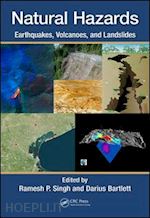
singh ramesh (curatore); bartlett darius (curatore) - natural hazards
Zoom

Natural Hazards Earthquakes, Volcanoes, and Landslides

;


Disponibilità: Normalmente disponibile in 20 giorni
A causa di problematiche nell'approvvigionamento legate alla Brexit sono possibili ritardi nelle consegne.


PREZZO
221,98 €
NICEPRICE
210,88 €
SCONTO
5%


Questo prodotto usufruisce delle SPEDIZIONI GRATIS
selezionando l'opzione Corriere Veloce in fase di ordine.


Pagabile anche con Carta della cultura giovani e del merito, 18App Bonus Cultura e Carta del Docente


Facebook Twitter Aggiungi commento


Spese Gratis

Dettagli

Genere:Libro
Lingua: Inglese
Editore:

CRC Press

Pubblicazione: 03/2018
Edizione: 1° edizione


Note Editore

Over the years, the interactions between land, ocean, biosphere and atmosphere have increased, mainly due to population growth and anthropogenic activities, which have impacted the climate and weather conditions at local, regional and global scales. Thus, natural hazards related to climate changes have significantly impacted human life and health on different spatio-temporal scales and with socioeconomic bearings. To monitor and analyze natural hazards, satellite data have been widely used in recent years by many developed and developing countries. In an effort to better understand and characterize the various underlying processes influencing natural hazards, and to carry out related impact assessments, Natural Hazards: Earthquakes, Volcanoes, and Landslides, presents a synthesis of what leading scientists and other professionals know about the impacts and the challenges when coping with climate change. Combining reviews of theories and methods with analysis of case studies, the book gives readers research information and analyses on satellite geophysical data, radar imaging and integrated approaches. It focuses also on dust storms, coastal subsidence and remote sensing mapping. Some case studies explore the roles of remote sensing related to landslides and volcanoes. Overall, improved understanding of the processes leading to these hazardous events will help scientists predict their occurrence. Features Provides information on the physics and physical processes of natural hazards, their monitoring and the mapping of damages associated with these hazards Explains how natural hazards are strongly associated with coupling between land–ocean–atmosphere Includes a comprehensive overview of the role of remote sensing in natural hazards worldwide Examines risk assessment in urban areas through numerical modelling and geoinformation technologies Demonstrates how data analysis can be used to aid in prediction and management of natural hazards


Sommario

Gujarat Earthquake: Ground Deformation. M. G. Thakkar Gujarat Earthquake: Liquefaction. M. G. Thakkar Earthquakes and Medical Complications. Scarlet Benson, Laura Ebbeling, Michael J. VanRooyen and Susan A. Bartels Utilization of satellite geophysical data as precursors for earthquake monitoring. T. J. Majumdar Satellite radar imaging and its application to natural hazards. Matt E. Pritchard and Sang-Ho Yun DEMETER Satellite and Detection of Earthquake Signals. Michel Parrot TIR Anomaly as Earthquake Precursor. Luca Piroddi Stress Change and earthquake triggering by reservoirs: role of fluids. Kalpna Gahalaut Earthquake Precursory Studies in India: An Integrated Approach.Geomorphic Features Associated with Erosion. Brijesh K. Bansal and Mithila Verma Geomorphic Features Associated with Erosion Niki Evelpidou, Isidoros Kampolis and Anna Karkani Thar Desert: Source for Dust Storm. Priyabrata Santra, Suresh Kumar and M. M. Roy Coastal Subsidence: Causes, Mapping, and Monitoring. Andrea Taramelli, Ciro Manzo, Emiliana Valentini and Loreta Cornacchia Subsidence Mapping Using InSAR.Earthquakes and Associated Landslides in Pakistan. Mukesh Gupta Landslides in Jamaica: Distribution, Cause, Impact and Management. Servel Miller, Anestoria Shalkowski, Norman Harris, Dionne Richards and Lyndon Brown Landslides: Causes, Mapping, and Monitoring: Examples from Malaysia. Omar F. Althuwaynee and Biswajeet Pradhan Mapping and Monitoring of Landslides Using LiDAR. Michel Jaboyedoff, Antonio Abellán, Dario Carrea, Marc-Henri Derron, Battista Matasci and Clément Michoud Radar Monitoring of Volcanic Activities Zhong Lu and Daniel Dzurisin Active Volcanoes: Satellite Remote Sensing. Nicola Pergola, Eugenio Sansosti and Francesco Marchese Application of Thermal Remote Sensing to the Observation of Natural Hazards. Matthew Blackett


Autore

Dr. Ramesh P. Singhis a Professor at the Department of Physics, Computational Science, and Engineering in Schmid College of Science, Chapman University, California. He is a member of several national and international societies. From 2001 to 2007 he was the Editor in Chief of the Journal of the Indian Society of Remote Sensing and since 2010 he has been the Editor in Chief of Geomatics, Natural Hazards and Risk journal published by Taylor and Francis Group. His research interests are: Natural Hazards, Early Warning of coastal earthquakes, Soil moisture, Landslides, Snow avalanches, Floods, Dust storms, Remote sensing applications, Geophysical Explorations, Atmospheric pollution and Mining Environment. He has received several Awards and Recognitions and has written numerous scientific articles. Dr. Darius Bartlett is a Lecturer in Geography at University College Cork, Cork, Ireland. His experience includes: Geography Department First Year Science coordinator; Chair, Departmental Staff-Student Liaison Committee; Member and past Chair, Geography Department Safety Committee; Member of Geography Department Computer sub-committee; Member of Geography Department Science sub-committee; Member, Academic Board for Earth and Environmental Sciences; Coordinator of MSc in GIS and Remote Sensing programme 2009 - 2012; Coordinator of MSc in Applied Coastal and Marine Management 2014. His research interests are Geoinformatics; Geographical Information Systems; Coastal zone applications of GIS; Terrestrial Laser Scanning; spatial information infrastructures; geoinformatics for cultural heritage; cultural and societal aspects of GIS; the community and participatory use of geoinformatics; the role of information technologies and fieldwork respectively in the teaching of geography.


Altre Informazioni

ISBN:

9781138054431

Condizione: Nuovo
Dimensioni: 10 x 7 in Ø 2.73 lb
Formato: Copertina rigida
Illustration Notes:177 b/w images, 85 color images and 26 tables
Pagine Arabe: 526


Dicono di noi