libri scuola books Fumetti ebook dvd top ten sconti 0 Carrello


Torna Indietro

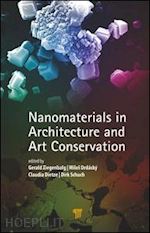
ziegenbalg gerald (curatore); drdácký miloš (curatore); dietze claudia (curatore); schuch dirk (curatore) - nanomaterials in architecture and art conservation
Zoom

Nanomaterials in Architecture and Art Conservation

; ; ;


Disponibilità: Normalmente disponibile in 20 giorni


PREZZO
180,98 €
NICEPRICE
171,93 €
SCONTO
5%


Questo prodotto usufruisce delle SPEDIZIONI GRATIS
selezionando l'opzione Corriere Veloce in fase di ordine.


Pagabile anche con Carta della cultura giovani e del merito, 18App Bonus Cultura e Carta del Docente


Facebook Twitter Aggiungi commento


Spese Gratis

Dettagli

Genere:Libro
Lingua: Inglese
Pubblicazione: 11/2018
Edizione: 1° edizione


Note Editore

The conservation and protection of buildings that constitute our cultural heritage are complex tasks calling for a comprehensive knowledge of the historical background of the buildings, as well as the construction technologies and materials used. Nanomaterials in Architecture and Art Conservation gives a comprehensive overview of the state of the art of using nanomaterials in conservation sciences, mainly for stone, mortar and plaster strengthening, but also for the consolidation of wall paintings. The book compiles and details deterioration mechanisms of stone and historical mortars, as well as methods of characterising and testing consolidation effects. The non- or semi-destructive characterisation methods that will be presented allow additional measurements to characterise objects before and after any interventions. Besides, general aspects of inorganic consolidants are targeted. The focus, in particular, is the application of nanolime as a new consolidation agent. Basic characteristics and application advices as well as beneficial combinations with other consolidation agents, such as silicic acid esters, are emphasised. What makes this book so special is the large number of practical applications described from the viewpoint of different restorers, offering a direct inside view of the procedure for the conservation of historical monuments. Restorers dealing with stone, mortar and plaster conservation; artists; advanced undergraduate- and graduate-level students of conservation science, art and nanotechnology; offices for the protection of monuments and heritage agencies; and researchers in materials science, conservation, nanotechnology and chemistry, especially those with an interest in applied sciences, will find this book a great reference.


Sommario

Historic substrate characterisation and modelling. Deterioration of stone and historic mortars. J Weber & M Drdácký Physical properties and their characterization. M Drdácký Physical modelling and testing of consolidation e?ects. M Drdácký Microscopy as tool for the characterisation of materials. J Weber Chemical composition, chemical reactivity and their determination. G Ziegenbalg Inorganic binders and consolidants – A critical review. G Ziegenbalg, Z Slìžková and R Ševcík Fundamentals of nanolime. G Ziegenbalg, C Dietze and G Ziegenbalg Laboratory characterisation of the action of nanolime. A Dähne, C Herm and G Ziegenbalg The combination of nanolime dispersions with silicic acid esters. M Dobrzynska-Musiela et al. The facade of the Church of the Visitation Order in Warsaw. M Dobrzynska-Musiela The western elevation of St. John’s Cathedral in Torun. M Dobrzynska-Musiela. Dolní Kounice. L Machacko et al. Aachen Orsbach. E Piaszczynski Megalopolis. E Piaszczynski and V Wolf Heraculaneum. A Dähne, C Herm and T Köberle. Statue of Saint Florian. D Macounová and Z Slìžková Leuben Castle. A Dähne and C Herm Dahlen Castle. A Dähne and C Herm Consolidation of paint layer with lime nanosols. J Vojtechovsky Nanolime – recent publications and application recommendations. G Ziegenbalg and C Dietze


Autore

Gerald Ziegenbalg received his PhD in inorganic chemistry from TU Bergakademie Freiberg, Germany, in 1990 and his habilitation in chemical engineering in 1998. He is the CEO of IBZ-Salzchemie GmbH & Co. KG, Germany, and honorary professor at the University of Applied Sciences Dresden, Germany. Prof. Ziegenbalg’s areas of interest are nanomaterials for stone and mortar conservation, as well as chemical engineering. Miloš Drdácký, former director of the Institute of Theoretical and Applied Mechanics of the Czech Academy of Sciences, Staré Mesto, Czech Republic, and an elected fellow of the Engineering Academy of the Czech Republic, is experienced in research on material, structural, and urban issues of architectural heritage and historical settlements. Claudia Dietze studied chemistry at the University of Leipzig, Germany, and obtained her PhD in analytical chemistry in 2016. Since 2017, she has been working at IBZ-Salzchemie GmbH & Co. KG in the field of stone conservation and development of consolidation agents. Dirk Schuch studied chemistry at the Friedrich-Schiller-Universität Jena, Germany. He received his PhD in inorganic chemistry and Master’s in business administration in 2014. Since 2015, he has been working as R&D project manager at IBZ-Salzchemie GmbH & Co. KG.


Altre Informazioni

ISBN:

9789814800266

Condizione: Nuovo
Dimensioni: 9 x 6 in Ø 2.29 lb
Formato: Copertina rigida
Illustration Notes:254 b/w images, 42 color images and 53 tables
Pagine Arabe: 458
Pagine Romane: xviii


Dicono di noi