libri scuola books Fumetti ebook dvd top ten sconti 0 Carrello


Torna Indietro

mcneill j. r. - mosquito empires
Zoom

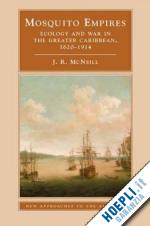
Mosquito Empires Ecology and War in the Greater Caribbean, 1620–1914


Disponibilità: Normalmente disponibile in 20 giorni
A causa di problematiche nell'approvvigionamento legate alla Brexit sono possibili ritardi nelle consegne.


PREZZO
33,98 €
NICEPRICE
32,28 €
SCONTO
5%


Questo prodotto usufruisce delle SPEDIZIONI GRATIS
selezionando l'opzione Corriere Veloce in fase di ordine.


Pagabile anche con Carta della cultura giovani e del merito, 18App Bonus Cultura e Carta del Docente


Facebook Twitter Aggiungi commento


Spese Gratis

Dettagli

Genere:Libro
Lingua: Inglese
Pubblicazione: 01/2010


Note Editore

This book explores the links among ecology, disease, and international politics in the context of the Greater Caribbean - the landscapes lying between Surinam and the Chesapeake - in the seventeenth through early twentieth centuries. Ecological changes made these landscapes especially suitable for the vector mosquitoes of yellow fever and malaria, and these diseases wrought systematic havoc among armies and would-be settlers. Because yellow fever confers immunity on survivors of the disease, and because malaria confers resistance, these diseases played partisan roles in the struggles for empire and revolution, attacking some populations more severely than others. In particular, yellow fever and malaria attacked newcomers to the region, which helped keep the Spanish Empire Spanish in the face of predatory rivals in the seventeenth and early eighteenth centuries. In the late eighteenth and through the nineteenth century, these diseases helped revolutions to succeed by decimating forces sent out from Europe to prevent them.


Sommario

Part I. Setting the Scene: 1. The argument: mosquito determinism and its limits; 2. Atlantic empires and Caribbean ecology; 3. Deadly fevers, deadly doctors; Part II. Imperial Mosquitoes: 4. From Recife to Kourou: yellow fever takes hold, 1620–1764; 5. Cartagena and Havana: yellow fever rampant; Part III. Revolutionary Mosquitoes: 6. Lord Cornwallis vs anopheles quadrimaculatus, 1780–1; 7. Revolutionary fevers: Haiti, New Granada, and Cuba, 1790–1898; 8. Epilogue: vector and virus vanquished.


Prefazione

This book explores the links among ecology, disease, and international politics in the context of the Greater Caribbean in the seventeenth through early twentieth centuries. Yellow fever and malaria attacked newcomers, which helped keep the Spanish Empire Spanish in the seventeenth and early eighteenth centuries. In the late eighteenth and through the nineteenth century, these diseases helped revolutions to succeed by decimating European troops.


Autore

J. R. McNeill is University Professor in the History Department and School of Foreign Service at Georgetown University. His books include The Mountains of the Mediterranean World (Cambridge University Press, 2003); Something New Under the Sun: An Environmental History of the Twentieth-Century World (2000), co-winner of the World History Association book prize and the Forest History Society book prize and runner-up for the BP Natural World book prize; and most recently The Human Web: A Bird's-Eye View of World History (2003), co-authored with his father, William H. McNeill. He has also published more than 40 scholarly articles in professional and scientific journals.


Altre Informazioni

ISBN:

9780521459105

Condizione: Nuovo
Collana: New Approaches to the Americas
Dimensioni: 226 x 25 x 150 mm Ø 520 gr
Formato: Brossura
Illustration Notes:12 maps
Pagine Arabe: 390


Dicono di noi