Questo prodotto usufruisce delle SPEDIZIONI GRATIS
selezionando l'opzione Corriere Veloce in fase di ordine.
Pagabile anche con Carta della cultura giovani e del merito, 18App Bonus Cultura e Carta del Docente
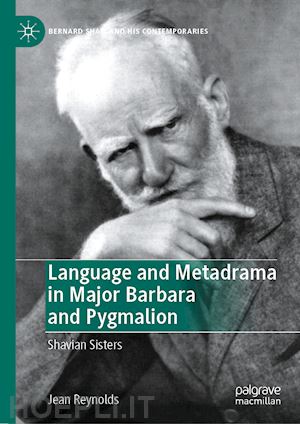
This book focuses on two important topics in Shaw’s Major Barbara and Pygmalion that have received little attention from critics: language and metadrama. If we look beyond the social, political, and economic issues that Shaw explored in these two plays, we discover that the stories of the two “Shavian sisters”— Barbara Undershaft and Eliza Doolittle—are deeply concerned with performance and what Jacques Derrida calls “the problem of language.” Nearly every character in Major Barbara produces, directs, or acts in at least one miniature play. In Pygmalion, Henry Higgins is Eliza’s acting coach and phonetics teacher, as well as the star of an impromptu, open-air phonetics show. The language content in these two plays is just as intriguing. Did Eliza Doolittle have to learn Standard English to become a complete human being? Should we worry about the bad grammar we hear at Barbara Undershaft’s Salvation Army shelter? Is English losing its precision and purity?Meanwhile, in the background, Shaw keeps reminding us that language and theatre are always present in our everyday lives—sometimes serving as stabilizing forces, and sometimes working to undo them.
Part I Barbara and Eliza.- Chapter 1 Shavian Sisters.- Chapter 2 “What’s to Become of Me?”.- Chapter 3 The Power of Imagination.- Part II A Playwright at Work.- Chapter 4 Seeing Double.- Chapter 5 A Girl Becomes a Woman.- Chapter 6 The Undershaft Inheritance.- Part III The Problem of Language.- Chapter 7 “Why Can’t the English?”.- Chapter 8 “It Don’t Matter, Anyhow”.- Chapter 9 Competing Components.- Chapter 10 “The Holiest and Greatest Things”.- Afterword.
Jean Reynolds is Professor Emerita of English at Polk State College, USA. Her previous publications include Shaw and Feminisms (2013), co-edited with D.L. Hadfield, and Pygmalion’s Wordplay: The Postmodern Shaw (1999), as well as multiple articles and reviews for SHAW: The Journal of Shaw Studies, of which she is an editorial board member.


Il sito utilizza cookie ed altri strumenti di tracciamento che raccolgono informazioni dal dispositivo dell’utente. Oltre ai cookie tecnici ed analitici aggregati, strettamente necessari per il funzionamento di questo sito web, previo consenso dell’utente possono essere installati cookie di profilazione e marketing e cookie dei social media. Cliccando su “Accetto tutti i cookie” saranno attivate tutte le categorie di cookie. Per accettare solo deterninate categorie di cookie, cliccare invece su “Impostazioni cookie”. Chiudendo il banner o continuando a navigare saranno installati solo cookie tecnici. Per maggiori dettagli, consultare la Cookie Policy.