libri scuola books Fumetti ebook dvd top ten sconti 0 Carrello


Torna Indietro

erdberg philip; ackley craig n.; beyer kristen; mack shannon m. - investigative and forensic interviewing
Zoom

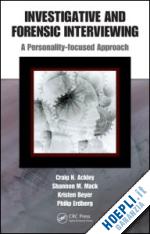
Investigative and Forensic Interviewing A Personality-focused Approach

; ; ;


Disponibilità: Normalmente disponibile in 20 giorni
A causa di problematiche nell'approvvigionamento legate alla Brexit sono possibili ritardi nelle consegne.


PREZZO
169,98 €
NICEPRICE
161,48 €
SCONTO
5%


Questo prodotto usufruisce delle SPEDIZIONI GRATIS
selezionando l'opzione Corriere Veloce in fase di ordine.


Pagabile anche con Carta della cultura giovani e del merito, 18App Bonus Cultura e Carta del Docente


Facebook Twitter Aggiungi commento


Spese Gratis

Dettagli

Genere:Libro
Lingua: Inglese
Editore:

CRC Press

Pubblicazione: 12/2010
Edizione: 1° edizione


Note Editore

Investigative and Forensic Interviewing: A Personality-Focused Approach looks at the personality styles most commonly encountered in the criminal justice system and demonstrates how to use this insight to plan and conduct a productive interview. The book includes chapters on narcissistic, antisocial, psychopathic, borderline, inadequate/immature, paranoid, and schizotypal personalities. Written by forensic psychologists and former FBI investigators, each chapter begins with a vignette that displays the personality of an interviewee investigators might encounter in a forensic setting and then covers: Descriptions of how each personality style views him or herself and the world, and how these views lead to problematic behavior Ways to indirectly assess a subject through interviews with associated others, and through review of records Behaviors investigators are likely to encounter during the interview, and responses those behaviors may provoke Clues garnered from nonverbal behavior, including eye contact, facial expressions, and posture What type of questions to ask, and how to ask them Finally, each chapter applies all of this information to an actual interview based on the opening vignette. This book is not for diagnosing personality disorders, but rather exists to help forensic interviewers understand the core traits that influence people’s responsiveness. This personality-focused approach is helpful for professionals in a variety of areas including police, attorneys, parole officers, mental health workers, and others who interview witnesses, suspects, and offenders throughout the criminal justice system.


Sommario

Chapter 1 IntroductionPurpose of This Book How to Use This Book Vignette Description of the Personality Assessing the Individual Preparation Issues The Interview Key Points to Remember Interview versus Interrogation Legal and Policy Considerations Reference Chapter 2 The Narcissistic Personality Introduction Description of the Oblivious Narcissist Assessing the Oblivious Narcissist Preparation Issues Understanding Your Reactions to the Individual Who Should Conduct the Interview Number of Interviewers Physical Space/Environment/Interpersonal Space Nonverbal Behavior Questions Recording the Interview (Notetaking, Audio/Video Recording) Time Frame The Interview Key Points to Remember Do Don’t Description of the Vulnerable Narcissist Assessing the Vulnerable Narcissist Preparation Issues Understanding Your Reactions to the Individual Who Should Conduct the Interview Number of Interviewers Physical Space/Environment/Interpersonal Space Nonverbal Behavior Questions Recording the Interview (Notetaking, Audio/Video Recording) Time Frame The Interview Key Points to Remember Do Don’t References Chapter 3 The Antisocial Personality Description of the Antisocial Personality Assessing the Antisocial Personality Important Areas and Nature of Inquiry Questions Sources of Information Preparation Issues Understanding Your Reactions to the Individual Who Should Conduct the Interview Number of Interviewers Physical Space/Environment/Interpersonal Space Nonverbal Behavior Questions Recording the Interview (Notetaking, Audio/Video Recording) Time Frame Review of Records The Interview Key Points to Remember Do Don’t Reference Chapter 4 The Psychopathic Personality Description of the Psychopathic Personality Views of Self and Others Low Levels of Fear and Anxiety Emotional Deficiencies Associated Features Assessing the Psychopathic Personality Core Questions The Disciplined Psychopath The Undisciplined Psychopath Preparation Issues Understanding Your Reactions to the Individual Who Should Conduct the Interview Number of Interviewers Physical Space/Environment/Interpersonal Space Nonverbal Behavior Questions Recording the Interview (Notetaking, Audio/Visual Recording) Time Frame The Interview Attacking and/or Hostile Behavior Friendly and Charming Behavior Sexually Manipulative Behavior "Game" Behavior General Considerations Key Points to Remember Do Don’t Reference Chapter 5 The Borderline Personality Description of the Borderline Personality Assessing the Borderline Personality Preparation Issues Understanding Your Reactions to the Individual Who Should Conduct the Interview Number of Interviewers Physical Space/Environment/Interpersonal Space Nonverbal Behavior Questions Recording the Interview (Notetaking, Audio/Video Recording) The Interview Key Points to Remember Do Don’t References Chapter 6 The Inadequate / Immature Personality Description of the Inadequate/Immature Personality Assessing the Inadequate/Immature Personality Preparation Issues Understanding Your Reactions to the Individual Who Should Conduct the Interview Number of Interviewers Physical Space/Environment/Interpersonal Space Nonverbal Behavior Questions Recording the Interview (Notetaking, Audio/Video Recording) Time Frame The Interview Key Points to Remember Do Don’t Reference Chapter 7 The Paranoid Personality Description of the Paranoid Personality Assessing the Paranoid Personality Preparation Issues Understanding Your Reactions to the Individual Who Should Conduct the Interview Number of Interviewers Physical Space/Environment/Interpersonal Space Nonverbal Behavior Questions Recording the Interview (Notetaking, Audio/Video Recording) Time Frame The Interview Key Points to Remember Do Don’t References Chapter 8 The Schizotypal Personality Describing the Schizotypal Personality Assessing the Schizotypal Personality Preparation Issues Understanding Your Reactions to the Individual Who Should Conduct the Interview Number of Interviewers Physical Space/Environment/Interpersonal Space Nonverbal Behavior Questions Recording the Interview (Notetaking, Audio/Video Recording) Time Frame The Interview Key Points to Remember Do Don’t References Appendix A The Dimensional View of Personality Personality: A Constellation of Traits The Personality Continuum: Style versus Disorder The Relationships Between Personality Types Borderline, Narcissistic, and Antisocial Personalities Narcissistic, Antisocial, and Psychopathic Personalities The Borderline, Narcissistic, Antisocial, Psychopathic Continuum References Appendix B: Glossary Index


Autore

Craig N. Ackley, M.S., is a former supervisory special agent with the FBI. He retired from the Behavioral Analysis Unit (BAU) of the FBI’s National Center for the Analysis of Violent Crime where he provided psychological and behavioral support primarily in the areas of sexual assault, domestic violence, stalking, and homicide. He is currently the president of Behavioral Science Education and Consultation Services, Inc. Shannon McAuliffe Mack, M.A., is a former senior research analyst with the FBI’s National Center for the Analysis of Violent Crime, where she provided research support and case-specific operational assistance. She is currently vice president of Behavioral Science Education and Consultation Services, Inc., where she provides operational assistance and training in the areas of trial strategy, interview strategy, and case analysis. Kristen Beyer, Ph.D., is a licensed clinical psychologist who formerly worked in the FBI’s National Center for the Analysis of Violent Crime as the supervisory social/behavioral science research coordinator where she provided consultation, training, and research on violent crime matters. She is currently a consultant with Behavioral Science Education and Consultation Services, Inc. and an adjunct professor. Philip Erdberg, PhD, is a diplomate in clinical psychology of the American Board of Professional Psychology. He is a past president of the Society for Personality Assessment, the 1995 recipient of the Society’s Distinguished Contribution Award, and the 2001 recipient of the Outstanding Achievement Award of the Forensic Mental Health Association of California. He consults in a variety of school, clinical, correctional, and law enforcement settings and is a frequent workshop presenter.


Altre Informazioni

ISBN:

9781420084252

Condizione: Nuovo
Dimensioni: 9 x 6 in Ø 0.95 lb
Formato: Copertina rigida
Illustration Notes:8 b/w images
Pagine Arabe: 196


Dicono di noi