libri scuola books Fumetti ebook dvd top ten sconti 0 Carrello


Torna Indietro

villaverde roberto - fundamental concepts of earthquake engineering
Zoom

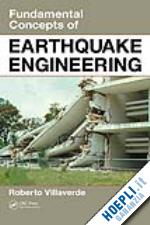
Fundamental Concepts of Earthquake Engineering


Disponibilità: Non ordinabile


PREZZO
128,98 €


Questo prodotto usufruisce delle SPEDIZIONI GRATIS
selezionando l'opzione Corriere Veloce in fase di ordine.


Pagabile anche con Carta della cultura giovani e del merito, Carta della Cultura e Carta del Docente


Facebook Twitter Aggiungi commento


Spese Gratis

Dettagli

Genere:Libro
Lingua: Inglese
Editore:

CRC Press

Pubblicazione: 01/2009
Edizione: 1° edizione


Trama

This textbook presents the fundamental concepts involved in the assessment of earthquake effects on structural systems. With an overview of the main aspects and purposes of earthquake engineering, this book describes the types and the extent of damage that an earthquake can produce, illustrated with a wide range of historical case studies. It covers the different ways that earthquake motions can be characterized for engineering purposes and discusses how local soil conditions may affect the methods used to quantify these effects. The text also introduces basic concepts of seismology, the design spectrum, base isolation, and damping enhancement with added energy dissipating devices.


Note Editore

While successfully preventing earthquakes may still be beyond the capacity of modern engineering, the ability to mitigate damages with strong structural designs and other mitigation measures are well within the purview of science. Fundamental Concepts of Earthquake Engineering presents the concepts, procedures, and code provisions that are currently being used to make structures as earthquake-resistant as is presently feasible. The book begins by describing the purpose, main aspects, and historical development of earthquake engineering and provides an overview of the type and extent of damage an earthquake can produce. It then introduces the concepts of seismology, the mechanisms of earthquake generation and propagation, and the difference between the various scales used to quantify the size of an earthquake and its potential to cause damage. The book also discusses the response spectrum and the different ways earthquake ground motions may be characterized and how local soil conditions may affect ground motion characteristics. Later chapters examine the design spectrum, conventional methods used to calculate the response of structures, soil-structure systems, and nonstructural components to earthquake ground motions. This comprehensive resource is certain to advance the knowledge of those tasked with taking preemptive action against the devastating effects of major, catastrophic earthquakes.


Sommario

Introduction Seismic Regions of the World Earthquake Genesis Earthquake Propagation Measurement of Earthquakes Characterization of Strong Ground Motions Seismic Hazard Assessment Influence of Local Site Conditions Design Response Spectrum Structural Response by Response Spectrum Method Structural Response by Step-by-Step Integration Methods Structural Response by Equivalent Lateral Force Procedure Structural Response Considering Soil–Structure Interaction Seismic Response of Nonstructural Elements Seismic Protection with Base Isolation Seismic Protection with Energy Dissipating Devices Seismic Code Provisions Appendix


Autore

Roberto Villaverde


Altre Informazioni

ISBN:

9781420064957

Condizione: Nuovo
Dimensioni: 10 x 7 in Ø 4.05 lb
Formato: Copertina rigida
Illustration Notes:509 b/w images, 123 tables and 100 equations
Pagine Arabe: 974


Dicono di noi