libri scuola books Fumetti ebook dvd top ten sconti 0 Carrello


Torna Indietro

primorac dragan (curatore); schanfield moses (curatore) - forensic dna applications
Zoom

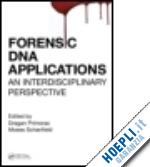
Forensic DNA Applications An Interdisciplinary Perspective

;


Disponibilità: Non disponibile o esaurito presso l'editore


PREZZO
329,98 €


Questo prodotto usufruisce delle SPEDIZIONI GRATIS
selezionando l'opzione Corriere Veloce in fase di ordine.


Pagabile anche con Carta della cultura giovani e del merito, Carta della Cultura e Carta del Docente


Facebook Twitter Aggiungi commento


Spese Gratis

Dettagli

Genere:Libro
Lingua: Inglese
Editore:

CRC Press

Pubblicazione: 03/2014
Edizione: 1° edizione


Note Editore

Forensic DNA Applications: An Interdisciplinary Perspective was developed as an outgrowth of a conference held by the International Society of Applied Biological Sciences. The topic was human genome–based applications in forensic science, anthropology, and individualized medicine. Assembling the contributions of contributors from numerous regions around the world, this volume is designed as both a textbook for forensic molecular biology students and a reference for practitioners and those in the legal system. The book begins with the history and development of DNA typing and profiling for criminal and civil purposes. It discusses the statistical interpretation of results with case examples, mitochondrial DNA testing, Y single nucleotide polymorphisms (SNPs) and short tandem repeats (STRs), and X SNP and STR testing. It also explores low copy number DNA typing, mixtures, and quality assurance and control. The second section examines the collection and preservation of biological evidence under a variety of different circumstances and the identification of human remains—including in mass disaster settings. It discusses applications to bioterrorism investigations, animal DNA testing in criminal cases, pedigree questions and wildlife forensic problems, applications in forensic entomology, and forensic botany. The third section explores recent developments and new technologies, including the rigorous identification of tissue of origin, mtDNA profiling using immobilized probe strips, chips and next-generation sequencing, the use of SNPs to ascertain phenotypic characteristics, and the "molecular autopsy" that looks at aspects of toxicogenetics and pharmacogenetics. The book concludes with a discussion on law, ethics, and policy. It examines the use of DNA evidence in the criminal justice system in both the United States and Europe, ethical issues in forensic laboratory practices, familial searches, DNA databases, ancestry searches, physical phenotyping, and report writing. The contributors also examine DNA applications in immigration and human trafficking cases and international perspectives on DNA databases.


Sommario

General Background and Methodological ConceptsBasic Genetics and Human Genetic Variation; Dragan Primorac, Moses S. Schanfield, and Damir MarjanovicForensic DNA Analysis and Statistics; Moses S. Schanfield, Dragan Primorac, and Damir MarjanovicForensic Aspects of mtDNA Analysis; Mitchell M. Holland and Gordan LaucY Chromosome in Forensic Science; Manfred Kayser and Kaye N. BallantyneForensic Application of X Chromosome STR s and SNPs;Toni Marie DiegoliLow Copy Number DNA Profiling; Theresa Caragine, Krista Currie, and Craig O’ConnorForensic DNA Mixtures, Approaches, and Analysis; Theresa Caragine, Adele Mitchell, and Craig O’ConnorForensic DNA Typing and Quality Assurance; Daniel Vanek and Katja DrobnicUses and ApplicationsCollection and Preservation of Physical Evidence; Henry Lee, Timothy Palmbach, Dragan Primorac, and Šimun AndelinovicIdentification of Missing Persons and Mass Disaster VictimIdentification by DNA; Barbara A. Butcher, Frederick R. Bieber,Zoran M. Budimlija, Sheila M. Dennis, and Mark A. DesireBioterrorism and Forensic Microbiology; Alemka Markotic, James W. LeDuc, and Jenifer SmithForensic Animal DN A Analysis; Marilyn A. Menotti-Raymond, Victor A. David, Stephen J. O’Brien, Sree Kanthaswamy, Petar Projic, Vedrana Škaro, Gordan Lauc, and Adrian LinacreApplication of DN A- Based Methods in Forensic Entomology; Jeffrey D. Wells and Vedrana ŠkaroForensic Botany: Plants as Evidence in Criminal Cases andas Agents of Bioterrorism; Heather Miller Coyle, Henry C. Lee, and Timothy M. PalmbachRecent Developments and Future Directions in Human Forensic Molecular BiologyForensic Tissue Identification with Nucleic Acids; Dmitry Zubakov and Manfred KayserEvolving Technologies in Forensic DNA Analysis; Cassandra D. Calloway and Henry ErlichPrediction of Physical Characteristics, such as Eye, Hair,and Skin Color Based Solely on DNA; Elisa WurmbachMolecular Autopsy; Grace Axler-DiPerte, Frederick R. Bieber,Zoran Budimlija, Antii Sajantila, Donald Siegel, and Yingying TangGenetic Genealogy in Genomic Era; Jake Byrnes, Natalie M. Myres, and Peter A. UnderhillLaw, Ethics, and PolicyDNA as Evidence in the Courtroom; David H. Kaye, Frederick R. Bieber, and Damir PrimoracSome Ethical Issues in Forensic Genetics; Erin D. Williams and David H. KayeDNA in Immigration and Human Trafficking; Sara Huston Katsanis and Joyce KimDNA Databanking; Chris AsplenIndex


Autore

Dragan Primorac, M.D., Ph.D., is a pediatrician, forensic expert, and geneticist. Currently he serves as an adjunct professor at Eberly College of Science, The Pennsylvania State University, and The Henry C. Lee College of Criminal Justice and Forensic Sciences, University of New Haven in the United States and at Medical Schools in Split and Osijek in Croatia. Professor Primorac is a pioneer in the application of DNA analysis for identification of bodies in mass graves. He authored close to 200 scientific papers, book chapters, and abstracts in areas of forensic science, clinical medicine, molecular genetics, population genetics, genetic legacy of homo sapiens, education, science, and technology policy. Moses S. Schanfield, Ph.D., has undergraduate and master’s degrees in anthropology and a PhD degree in human genetics. He has been involved full time in forensic testing for 30 years. Professor Schanfield has been involved in the development of some of the critical functions of modern forensic DNA testing including the in-lane size ladder, which is used in all human identification testing. He has published extensively on forensic DNA testing and has testified in state, federal, and military courts in the United States and Canada, Puerto Rico, and Barbados.


Altre Informazioni

ISBN:

9781466580220

Condizione: Nuovo
Dimensioni: 10 x 7 in Ø 3.40 lb
Formato: Copertina rigida
Illustration Notes:114 color images, 60 tables and 10
Pagine Arabe: 647


Dicono di noi