libri scuola books Fumetti ebook dvd top ten sconti 0 Carrello


Torna Indietro

suryanarayana c. - experimental techniques in materials and mechanics
Zoom

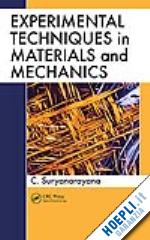
Experimental Techniques in Materials and Mechanics


Disponibilità: Normalmente disponibile in 20 giorni
A causa di problematiche nell'approvvigionamento legate alla Brexit sono possibili ritardi nelle consegne.


PREZZO
169,98 €
NICEPRICE
161,48 €
SCONTO
5%


Questo prodotto usufruisce delle SPEDIZIONI GRATIS
selezionando l'opzione Corriere Veloce in fase di ordine.


Pagabile anche con Carta della cultura giovani e del merito, 18App Bonus Cultura e Carta del Docente


Facebook Twitter Aggiungi commento


Spese Gratis

Dettagli

Genere:Libro
Lingua: Inglese
Editore:

CRC Press

Pubblicazione: 06/2011
Edizione: 1° edizione


Note Editore

Experimental Techniques in Materials and Mechanics provides a detailed yet easy-to-follow treatment of various techniques useful for characterizing the structure and mechanical properties of materials. With an emphasis on techniques most commonly used in laboratories, the book enables students to understand practical aspects of the methods and derive the maximum possible information from the experimental results obtained. The text focuses on crystal structure determination, optical and scanning electron microscopy, phase diagrams and heat treatment, and different types of mechanical testing methods. Each chapter follows a similar format: Discusses the importance of each technique Presents the necessary theoretical and background details Clarifies concepts with numerous worked-out examples Provides a detailed description of the experiment to be conducted and how the data could be tabulated and interpreted Includes a large number of illustrations, figures, and micrographs Contains a wealth of exercises and references for further reading Bridging the gap between lecture and lab, this text gives students hands-on experience using mechanical engineering and materials science/engineering techniques for determining the structure and properties of materials. After completing the book, students will be able to confidently perform experiments in the lab and extract valuable data from the experimental results.


Sommario

IntroductionMaterials Science and EngineeringStructurePropertiesOutline of the Book X-Ray DiffractionIntroductionCrystal StructureProduction of X-RaysAbsorption of X-RaysThe Bragg EquationDiffraction AnglesIntensities of Diffracted BeamsXRD EquipmentExamination of a Typical XRD PatternCrystal Structure DeterminationIndexing the XRD PatternDifferentiation between SC and BCC LatticesComparison with Electron and Neutron DiffractionExperimental Procedure Optical MicroscopyIntroductionPrinciple of the Optical MicroscopeComponents of the MicroscopeMicroscopic ObservationInformation Derivable from the MicrostructureSpecimen Preparation for Microscopic ExaminationSome Typical MicrostructuresPrecautionsExperimental Procedure Scanning Electron MicroscopyIntroductionBasic Design of the SEMElectron SourceElectron Beam–Specimen InteractionsSpecimen PreparationApplicationsExperimental Procedure The Iron–Carbon Phase Diagram and Microstructures of SteelsIntroductionPhase DiagramsRepresentation of Phase DiagramsThe Phase RuleApplication of the Phase RuleDerivation of Lever RuleThe Iron–Carbon Phase DiagramCooling Behavior and Microstructural DevelopmentDifferentiation between Proeutectoid Ferrite and Proeutectoid CementiteMicrostructural ObservationExperimental Procedure Heat Treatment of SteelsIntroductionReaction RatesIsothermal Transformation DiagramsTransformation ProductsRetained AusteniteIsothermal TreatmentsEffect of Alloying Elements on the T–T–T DiagramContinuous Cooling Transformation DiagramsTypes of Heat TreatmentTemper EmbrittlementProperties of Heat-Treated SteelsExperimental Procedure Hardenability of SteelsIntroductionDefinition of HardenabilityDistribution of HardnessSeverity of QuenchThe Grossmann TestThe Jominy End-Quench TestParameters Affecting HardenabilityJominy Tests and Continuous Cooling Transformation DiagramsHardness Tester to be UsedJominy Test for Nonferrous AlloysSome CommentsExperimental ProcedureResultsAdditional Experiment Hardness TestingIntroductionTypes of Hardness MeasurementsScratch Hardness MeasurementRebound Hardness MeasurementThe Durometer TestIndentation Hardness MeasurementBrinell Hardness TestingRockwell Hardness TestingVickers Hardness TestingMicrohardness TestingNanoindentation TestingGeneral ObservationsCorrelations.Experimental ProcedureObservationsAdditional Experiments Tensile TestingIntroductionMeasurement of StrengthBasic DefinitionsDeformation BehaviorThe Tensile TestProperties Obtained from the Tensile TestTrue Stress versus True Strain CurveGeneral ObservationsInfluence of Variables on Tensile PropertiesExperimental ProcedureObservationsResultsAdditional Experiment Impact TestingIntroductionImpact-Testing TechniquesDuctile–Brittle TransitionDetermination of Ductile–Brittle Transition TemperatureEffect of Variables on Impact EnergyPrecautionsCorrelations with Other Mechanical PropertiesDBTT in Nonmetallic MaterialsExperimental ProcedureObservations Fatigue TestingIntroductionDefinitionsFatigue TestingSome Typical Examples of Fatigue FailureFatigue Failure MechanismFactors Affecting the Fatigue Strength of MaterialsFracture Mechanics ApproachCorrelations between Fatigue Strength and Other Mechanical PropertiesPrecautionsExperimental ProcedureAdditional Experiments Creep TestingIntroductionThe Creep TestThe Creep CurveEffect of Stress and TemperatureCreep-Rupture TestCreep Resistance CriteriaLarson–Miller ParameterCreep in Ceramic MaterialsCreep in Polymeric MaterialsExperimental Procedure Index Exercises and Further Reading appear at the end of each chapter.


Autore

C. Suryanarayana is a professor of materials science and engineering in the Department of Mechanical, Materials and Aerospace Engineering at the University of Central Florida. Dr. Suryanarayana is a fellow of ASM International and the Institute of Materials, Minerals and Mining (UK). He has published over 330 technical papers and according to Thomson Reuters, is one of the top 40 materials scientists with the highest citation impact scores for papers published since 2000. His research focuses on rapid solidification processing, mechanical alloying, innovative synthesis/processing techniques, metallic glasses, superconductivity, quasicrystals, and nanostructured materials.


Altre Informazioni

ISBN:

9781439819043

Condizione: Nuovo
Dimensioni: 9.25 x 6.25 in Ø 1.75 lb
Formato: Copertina rigida
Illustration Notes:229 b/w images, 41 tables and Approx. 300 to 350 equations.
Pagine Arabe: 468


Dicono di noi