Questo prodotto usufruisce delle SPEDIZIONI GRATIS
selezionando l'opzione Corriere Veloce in fase di ordine.
Pagabile anche con Carta della cultura giovani e del merito, 18App Bonus Cultura e Carta del Docente
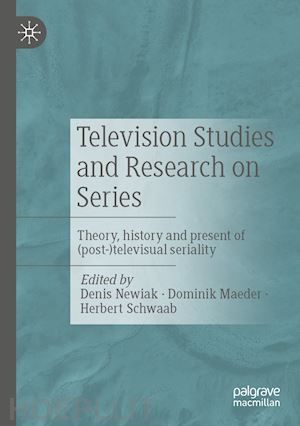
Television series enjoy an unbroken - popular as well as scholarly - attention. It is surprising, however, that in works on seriality in media and cultural studies, approaches to television studies and television history still play a rather minor role. Yet seriality should always be thought of in terms of television, since the two have always been inextricably interwoven - economically, technically and aesthetically. But what else constitutes the serial in television and how does it change its face in times of digitalization, streaming and interactivity? Is it possible to think of a genuine serial theory of the televisual - and what, in turn, can be learned from this for seriality beyond television? The essays in this volume contribute to shedding new light on the serial as a core principle of television and to providing new impulses for a television theory of the serial on the basis of diverse examples from the current range of television series.
Contributions on: Television as a plural and transmedial concept?.- Spatialized transmediality - processual seriality.- Historical perspectives in the 'quality series' discourse of the television industry.- Television series against late modern loneliness: Forms of telemedial communion exemplified by 13 Reasons Why.- On expelling television from the television series: reality TV and staggered seriality.- Evidence in series? Time and reality references of serial television formats in the digital transformation.- Game in series - Black Mirror: Bandersnatch.
Denis Newiak, M.A., is a PhD student in the Department of Applied Media Studies at the Brandenburg University of Technology Cottbus.
Dominik Maeder, M.A., is a research assistant at the Institute for Media Studies at the University of Bonn.
Dr. Herbert Schwaab is a senior academic councillor at the Institute for Information and Media, Language and Culture at the University of Regensburg.


Il sito utilizza cookie ed altri strumenti di tracciamento che raccolgono informazioni dal dispositivo dell’utente. Oltre ai cookie tecnici ed analitici aggregati, strettamente necessari per il funzionamento di questo sito web, previo consenso dell’utente possono essere installati cookie di profilazione e marketing e cookie dei social media. Cliccando su “Accetto tutti i cookie” saranno attivate tutte le categorie di cookie. Per accettare solo deterninate categorie di cookie, cliccare invece su “Impostazioni cookie”. Chiudendo il banner o continuando a navigare saranno installati solo cookie tecnici. Per maggiori dettagli, consultare la Cookie Policy.