libri scuola books Fumetti ebook dvd top ten sconti 0 Carrello


Torna Indietro

jones jr. j. benton - plant nutrition and soil fertility manual
Zoom

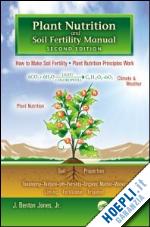
Plant Nutrition and Soil Fertility Manual


Disponibilità: Normalmente disponibile in 20 giorni
A causa di problematiche nell'approvvigionamento legate alla Brexit sono possibili ritardi nelle consegne.


PREZZO
97,98 €
NICEPRICE
93,08 €
SCONTO
5%


Questo prodotto usufruisce delle SPEDIZIONI GRATIS
selezionando l'opzione Corriere Veloce in fase di ordine.


Pagabile anche con Carta della cultura giovani e del merito, 18App Bonus Cultura e Carta del Docente


Facebook Twitter Aggiungi commento


Spese Gratis

Dettagli

Genere:Libro
Lingua: Inglese
Editore:

CRC Press

Pubblicazione: 01/2012
Edizione: Edizione nuova, 2° edizione


Note Editore

As soil and crop management procedures have become more complex, County Agricultural Agents, farm advisors, consultants, and fertilizer and chemical dealers have had to specialize in some aspect of soil fertility and crop nutrition management procedures, limiting their ability to provide a range of advice and services. Most farmers and growers can no longer turn to just one source for the information and instruction needed to achieve their production goals. With over 70 percent new material, the second edition of the Plant Nutrition and Soil Fertility Manual discusses the principles determining how plants grow and the elements essential for successful crop production, with a focus on the principles of soil fertility and plant nutrition. The book covers physical and chemical properties of soil, chemical and organic fertilizers, soil acidity and alkalinity, liming and liming materials, and micronutrients essential to plant growth. It also describes elements toxic to plants, soil testing, and plant analysis. The topics and discussion in this self-contained book are practical and user-friendly, yet comprehensive enough to cover material presented in upper-level soil and plant science courses. It allows practitioners with general background knowledge to feel confident applying the principles presented to soil/crop production systems.


Sommario

Section IIntroduction Management Requirements Productivity Factors Climatic Factors Moving Up the Yield Scale Product Quality Soil Fertility Principles Fertile Soil Defined Making and Keeping a Soil "Fertile" Biological Factors An "Ideal Soil" Soil Fertility Management Concepts Multiple Factor Yield Influence Soil Condition Related to Deficiency in a Major Element and Micronutrient Elemental Content of the Soil and Soil Solution Plant Nutrition Principles Photosynthesis The Function of Plants Determination of Essentiality Essential Element Content in Plants Classification of the Thirteen Essential Mineral Elements Role of the Essential Plant Nutrient Elements Plant Nutrient Element Sources Element Absorption and Translocation Elemental Accumulation Element Absorption and Plant Genetics Diagnostic Plant Symptoms of Essential Plant Nutrient Element InsufficienciesThe Plant RootIntroductionRoot FunctionRoot HairsLateral RootsThe RhizosphereRoot Ion AbsorptionRoot CropsHow to be a DiagnosticianThe Diagnostic ApproachBeing a DiagnosticianDiagnostic FactorsEvaluating Diagnostic ProceduresScoutingWeather ConditionsFactors Affecting Essential Nutrient Element Concentrations in PlantsPlant (Crop) WiltingSummaryCertified Crop Advisor ProgramsSection II: Physical and Physiochemical Characteristics of SoilSoil Taxonomy, Horizontal Characteristics, and Clay MineralsSoil Orders (U.S. System of Soil Taxonomy)Designations for Soil Horizons and LayersPhysical Properties of SoilsTextural ClassificationSoil Separates or Primary Soil SeparatesSoil Separate PropertiesSoil Texture Characterization DefinitionsSoil StructureTillage PracticesWater-Holding CapacityPhysiochemical Properties of SoilSoil Separate PropertiesMajor Phyllosilicate Minerals in SoilsCation Exchange Capacity (CEC) of a Soil Based on TextureCation Exchange Capacity (CEC) Determination of a SoilAnion Exchange CapacitySoil pH: Its Determination and InterpretationDefinitionsCauses of Soil AcidityWater pH Determination of Mineral Soil, Organic Soil, and Organic Soilless Rooting MediapH Determination using a Calibrated pH MeterOther Soil pH Determination ProcedureSalt pH Determination for a Mineral SoilpH Interpretation: Mineral SoilpH Interpretation: Organic SoilspH Interpretation: Organic Soilless MediumSoil pH ConstancyPlant Root FunctionSoil Acidity and NPK Fertilizer EfficiencySoil pH Effect on Elemental Availability and/or Soil Solution CompositionSoil Buffer pHpH Determination of WaterSoil Organic MatterDefinitions of Soil Organic Matter and Its ComponentsHumusSoil Organic Matter CharacteristicsMethods of Soil Organic Matter DeterminationManagement Requirements for High Organic Matter Content SoilsAdverse Affects of Organic Matter Additions Section III: Plant Elemental Requirements and Associated ElementsMajor Essential Plant ElementsTerminologyMethods of ExpressionEstablished Date for Essentiality/ResearchersCarbon, Hydrogen, and OxygenMajor Essential Element PropertiesMicronutrients Considered Essential to PlantsTerminologyEstablished Date for Essentiality/ResearchersContent and FunctionSoil and Plant Species AssociationsMicronutrient CharacteristicsMicronutrient PropertiesPossible Additional Essential MicronutrientsElements Considered Beneficial to PlantsThe A to Z Nutrient SolutionElements Essential for AnimalsBasis for Essentiality for Beneficial ElementsPotential Essential Elements"New" Beneficial ElementsElement SubstitutionForm of ResponseSummaryElements Considered Toxic to PlantsIntroductionThe Nature of Elemental ToxicityAluminum and Copper ToxicityOther ElementsPlant Species FactorThe Heavy MetalsTrace Elements Found in PlantsDefinitionElements Categorized as Trace ElementsHigh Soil Content ElementsAvailability FactorsAccumulator Plants and ElementsSymbiotic Element Section IV: Methods of Soil Fertility and Plant Nutrition AssessmentSoil TestingPurposesField SamplingSoil Laboratory SelectionLaboratory Soil Testing ProceduresInterpretation of a Soil Test ResultSoil Test Result Tracking (Monitoring)Liming and Fertilizer Use StrategiesPlant Analysis and Tissue TestingPlant Analysis ObjectivesSequence of ProceduresSampling TechniquesPlant Tissue Handling, Preparation, and AnalysisMethods of InterpretationWord Classification of Elemental ConcentrationsAs a Diagnostic TechniqueExperience RequiredData Logging/Tracking of Plant AnalysesUtilization of Plant Analyses for Nutrient Element ManagementTissue TestingIndirect Evaluation Procedures Section V: Amendments for Soil Fertility MaintenanceLime and Liming MaterialsLiming TermsLiming MaterialsLiming Materials and Their Calcium Carbonate Equivalent (CCE)Mesh SizeQuality Factor DesignationLime Requirement (LR)Soil Test Ratio of Ca to Mg Determines Form of Limestone to ApplyLiming Rate Determined by Acidifying Effect of Fertilizer"Lime Shock"Lime IncorporationDepth of IncorporationSubsoil pHInorganic Chemical Fertilizers and Their PropertiesDefinitionsFertilizer TerminologyCharacteristics of the Major Elements as FertilizerConversion Factors for the Major Essential Fertilizer ElementsCharacteristics of the Micronutrients as FertilizerThe Physical and Chemical Properties of FertilizersNaturally Occurring Inorganic FertilizersOrganic Fertilizers and Their PropertiesValueComposted Animal ManuresAnimal Manure Major Element CompositionOther Organic MaterialsSoil and Plant FactorsFertilizer PlacementObjectivesMethods of Fertilizer PlacementSoil Water, Irrigation, and Water QualitySoil Water TerminologySoil Factors Affecting Soil Water-Holding Capacity and MovementDrainageIrrigation MethodsIrrigation Water QualityWater Treatment ProceduresWhat is Water? Section VI: Methods of Soilless Plant ProductionHydroponicsHydroponics DefinedHistorical EventsHydroponic TechniquesHydroponic Growing SystemsRooting MediaWater QualityThe Nutrient SolutionReagents and Nutrient Solution FormulationsConcentration Range and RatiospH Interpretation-Hydroponic Nutrient SolutionReconstitution of the Nutrient SolutionAccumulation of Nutrient Elements and PrecipitatesSoilless Rooting and/or Growing MediaSoilless Media IngredientsSoilless Media FormulationsPhysical PropertiesPhysiochemical PropertiesControl of pHUse FormulationsBag Culture Systems"Fertility" Determination Procedure for an Organic Soilless Mix Section VII: MiscellaneousOrganic Farming/GardeningChemicalization of Crop Production"Organically Grown" DefinedSuitable Inorganic Fertilizer MaterialsSuitable Organic FertilizersOrganic Soil Fertility ManagementSoil Physical PropertiesFood Safety and Quality IssuesWeather and Climatic ConditionsDefinitionsClimatic FactorsWeather as a Diagnostic FactorBest Management Practices (BMPs)OriginBest Management Practice Application BroadenedBest PracticeImportant Protocol ConsiderationsPrecision FarmingSection AppendicesGlossaryFormulation and Use of Soil Extraction ReagentsPreparation Procedures and Elemental Content Determination for Plant TissueWeights and MeasuresReference Books and TextsReferencesIndex


Autore

Dr. J. Benton Jones has written extensively on the topics of soil fertility and plant nutrition over his professional career. After obtaining a B.S. degree in Agricultural Science from the University of Illinois, he served on active duty in the U.S. Navy for two years. After discharge from active duty, he entered graduate school, obtaining M.S. and Ph.D. degrees from the Pennsylvania State University in agronomy. For 10 years, Dr. Jones held the position as research professor at the Ohio Agricultural Research and Development Center (OARDC) in Wooster. During this time, his research activities focused on the relationship between soil fertility and plant nutrition. In 1967, he established the Ohio Plant Analysis Laboratory. Joining the University of Georgia faculty in 1968, Dr. Jones designed and had built the Soil and Plant Analysis Service Laboratory building for the Georgia Cooperative Extension Service, serving as its Director for 4 years. During the period from 1972 and his retirement in 1989, Dr. Jones held various research and administrative positions at the University of Georgia. Following retirement, he and a colleague established Micro-Macro Laboratory in Athens, Georgia, a laboratory providing analytical services for the assay of soils and plant tissues as well as water, fertilizers, and other similar agricultural substances. Dr. Jones was the first President of the Soil and Plant Analysis Council and then served as its Secretary-Treasurer for a number of years. He established two international scientific journals, Communications in Soil Science and Plant Analysis and the Journal of Plant Nutrition, serving as their Executive Editors during the early years of publication. Dr. Jones is considered an authority on applied plant physiology and the use of analytical methods for assessing the nutrient element status of rooting media and plants as a means for ensuring plant nutrient element sufficiency in both soil and soilless crop production settings.


Altre Informazioni

ISBN:

9781439816097

Condizione: Nuovo
Dimensioni: 9.25 x 6.25 in Ø 0.95 lb
Formato: Brossura
Illustration Notes:10 b/w images and 10 tables
Pagine Arabe: 304


Dicono di noi